
How reticulated foam is made.
From two liquid chemicals to a die-cut filter: the foaming reaction, the rise of the bun, the two industrial routes to removing cell membranes, and why the pore size was decided long before any of that.
Two liquids and a reaction.
Polyurethane foam begins as two liquid streams: a polyol and an isocyanate. Metered together in fixed proportion and mixed, they react — and the reaction does two things at once. It builds long polymer chains, turning liquid into solid, and it generates gas.
Because both happen together, the mixture does not simply set. It expands. Gas bubbles nucleate throughout the liquid and grow while the polymer around them is still soft enough to be pushed aside, then the polymer gels and locks the structure in place. The timing of those two curves against each other — gas generation and gelling — is the whole art of foam formulation. Gel too early and the bubbles cannot expand; too late and the structure collapses under its own weight.
The mixed liquid is poured onto a moving conveyor and allowed to rise freely into a continuous loaf several feet tall, called a bun or slabstock. The industry borrowed the bakery vocabulary and the analogy holds right through to slicing it.
Where PPI is decided.
This is the step most people get wrong, so it is worth stating plainly: pore size is set during foaming, not during reticulation.
Catalysts and surfactants in the chemical mix control how many bubbles nucleate and how large each one grows before the polymer gels. Many small nucleation sites give a fine, high-PPI foam; fewer, larger bubbles give a coarse, low-PPI one. A 20 PPI foam and an 80 PPI foam are therefore different formulations, not different processing of the same block.
Reticulation, which comes later, removes the membranes between cells. It does not change how many cells there are or how big they are. This is why pore size is a specification you give at the order stage rather than something that can be adjusted from stock — and why choosing a PPI is a decision worth making deliberately.
The bun has to rest.
A freshly risen bun is not finished. The reaction continues to completion over hours, and it is exothermic — the centre of a large block gets genuinely hot, hot enough that curing is a monitored stage rather than simply a wait. The block is left to cure and cool to a stable solid before anything is cut.
Curing also produces a feature that has to be dealt with: the outer faces cure against air and form a denser skin, quite different in behaviour from the material inside. That skin is skived off before slicing. It is one reason foam is supplied as cut sheet rather than as whole blocks — the usable material is the inside.
Removing the windows.
At this point the foam is open-celled but not reticulated. The cells connect, but thin membranes — cell windows — still span the gaps between the strands, and those membranes are what obstruct airflow. Reticulation removes them while leaving the much thicker skeletal struts intact. What remains is a three-dimensional lattice of strands with almost nothing in between: a solid you can see through.
Thermal reticulation — zapping
The bun is loaded into a sealed pressure vessel, the air is evacuated and replaced with a precisely proportioned combustible gas mixture, and the mixture is ignited. A controlled flame front sweeps through the block. Because the membranes are vanishingly thin and the struts are comparatively massive, the flame melts the membranes and passes on before the struts absorb enough heat to be damaged.
It is a violent-sounding process that is in fact very precise, and it leaves a smooth, clean, polished strand. It works on both polyester and polyether polyurethanes, which makes it the more generally applicable of the two routes.
Chemical reticulation — quenching
The alternative is a caustic bath at controlled concentration, temperature and dwell time, which etches the membranes away chemically. It leaves a rougher, more etched strand surface — which is an advantage where the foam has to hold liquid, because surface tension grips a rough strand better than a polished one.
Quenching suits polyester-based foams and is not effective on polyethers. It also tends to produce a softer feel, particularly in the finer grades.
| Route | Mechanism | Strand surface | Works on |
|---|---|---|---|
| Zapping | Controlled flame front in a sealed vessel | Smooth, clean, polished | Polyester and polyether |
| Quenching | Caustic bath, timed and temperature-controlled | Rough, etched — holds liquid well | Polyester only |
From block to filter.
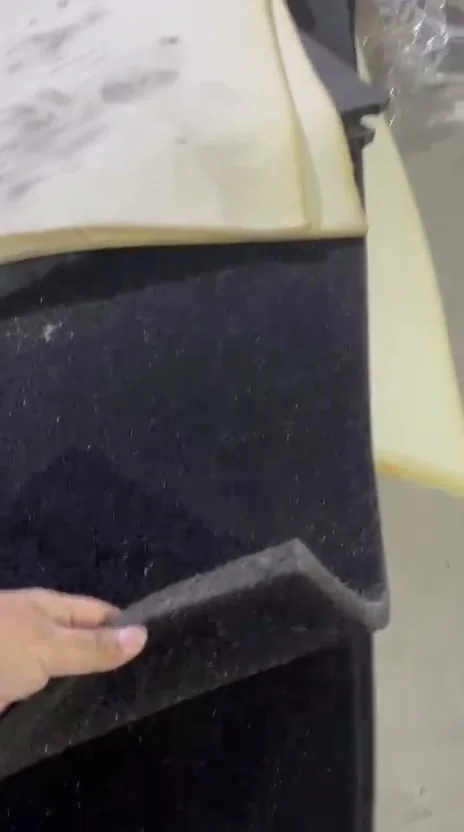
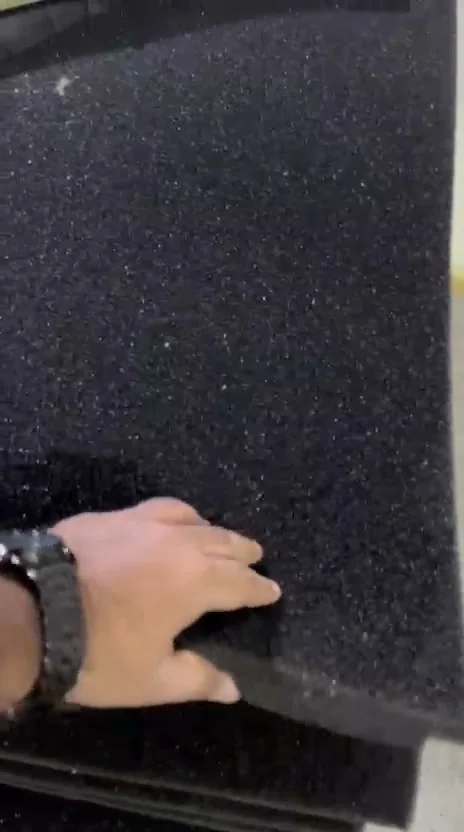
The reticulated block is then cut down. Horizontal slicing takes flat sheets off the block at a set thickness; rotary peeling spins the bun against a stationary blade to produce long continuous rolls. Thickness is a machine setting rather than a stock category, which is why we quote from 5 mm upwards with no fixed upper limit — see foam sheet stock.
The final step is what turns a sheet into a component: die-cutting to profile. Rings, discs, strips, gasket outlines and irregular shapes, cut to a drawing rather than trimmed by hand. Foam cuts unusually cleanly because it compresses under the blade instead of tearing, so internal features and tight radii come out sharp. That step is covered in die-cutting to your drawing.
Common questions.
What is reticulation?
Reticulation is a secondary process that removes the thin membranes, called cell windows, spanning the gaps between the strands of an open-cell foam. What is left is only the skeleton of struts that held those windows apart: a three-dimensional lattice with almost nothing in between. That is the difference between foam that resists airflow and foam you can blow through.
What is the difference between zapping and quenching?
They are the two industrial routes to the same result. Zapping is thermal: the bun goes into a sealed vessel, the air is replaced with a combustible gas mixture, and a controlled flame front is ignited that melts the thin membranes without damaging the heavier struts. Quenching is chemical: the foam passes through a caustic bath that etches the membranes away. Zapping leaves a smooth, clean strand and works on both polyester and polyether foams; quenching leaves a rougher strand that holds liquid well by surface tension and suits polyester foams.
Is the PPI decided during reticulation?
No — and this surprises people. Cell size is set during foaming, by the catalysts and surfactants in the chemical mix that control how many bubbles form and how big they grow before the polymer gels. A 20 PPI foam and an 80 PPI foam are different formulations, not different processing of the same block. Reticulation removes the membranes; it does not change how many cells there are.
Why is the foam block called a bun?
Because of how it is made. The mixed liquid is poured onto a moving conveyor and the reaction generates gas as it cures, so it rises rather than simply setting — expanding into a continuous loaf several feet tall. The industry borrowed the bakery term, and the analogy holds all the way through to slicing it.
Does reticulated foam have a skin that needs removing?
Yes. The outside faces of a bun cure against air and form a denser skin that behaves quite differently from the material inside. That skin is skived off before the block is sliced into sheets, which is one reason foam is supplied as cut sheet rather than as whole blocks.
Keep reading.
Ready to bring
your idea to life?
Whether you're an entrepreneur with a sketch or an established company scaling production, we'll treat your project like it's the only one on the floor.
Let's talk.
Prefer a quick chat? Call us directly, ping us on WhatsApp, or drop an email. We reply within a few hours during business hours.